
Tackling Himalayan Balsam: Our 2026 River Restoration Round-Up

This summer the ESRT team have been hard at work continuing to tackle one of our rivers' most persistent invasive plants: Himalayan balsam.
Through hands-on river restoration, social media updates and collaboration with our partners, we've been helping to protect riverbanks, support native wildlife and restore the natural health of our waterways.
Here's a look back at this year's Himalayan balsam work, the people involved and why tackling this invasive species matters for our rivers.

Why Does Himalayan Balsam Matter?
Himalayan balsam (Impatiens glandulifera) is an invasive non-native species (INNS) that thrives along riverbanks and in damp habitats. Originally introduced to the UK in the Victorian era as an ornamental plant, it has spread widely, often forming dense stands that outcompete native vegetation.
While its pink flowers may look attractive, this striking plant is a problem for our waterways because it takes over and outcompetes native species. Dense stands can reduce habitat availability for native species, reduce biodiversity and create monocultures.
Its shallow root system can also destabilise riverbanks and disturb sediment. When it grows densely, Himalayan balsam can impede water flow, potentially increasing the likelihood of flooding during periods of high rainfall.
Himalayan balsam is also highly effective at spreading. Each plant can produce hundreds of seeds, which are easily dispersed when its seed pods explode, sending seeds into the surrounding area and into waterways.
The plant dies back in autumn, leaving riverbanks more exposed to erosion during the winter months.
Why Do We Remove It?
Himalayan balsam can have a significant negative environmental impact, which is why tackling it is an important part of our river restoration work.
By removing Himalayan balsam and allowing native plants to recover, we can help improve habitat diversity, strengthen riverbanks and support healthier river ecosystems.
To protect and restore Essex and Suffolk's waterways, we remove Himalayan balsam wherever we can. This year, our work has taken place across the Stour, Fynn and Pant catchments, restoring 10 km of riverbank habitat.
The work is about more than removing a plant. It's about giving our riverside habitats the opportunity to recover.
How Do We Remove It?
Balsam is relatively easy to pull up by hand. We remove the plants, taking care to remove the roots, and destroy the roots and flowers to stop them growing and spreading. We also use sticks to 'bash' the balsam. It makes a surprisingly satisfying 'cronch-pop' sound!
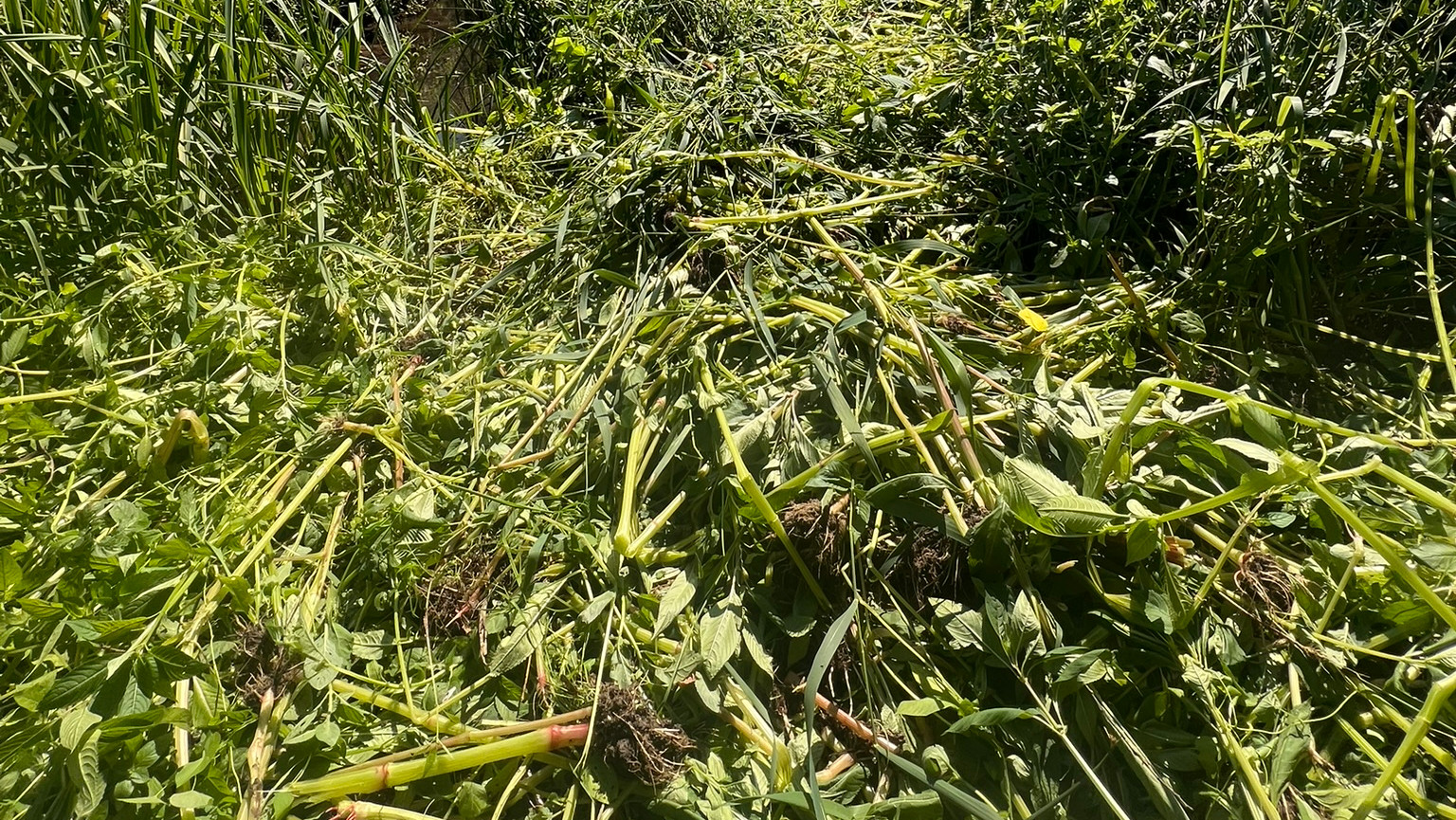
Because Himalayan balsam spreads so easily, returning to the same areas over successive seasons is important. Regular removal and monitoring help to prevent plants from reaching maturity and producing another generation of seeds.
Bringing Balsam Bashing to Social Media
This year, we've been taking you along with us through a series of videos shared on our social media channels.
From learning how Himalayan balsam arrived in the UK to exploring how it spreads and how to identify it, the video series has helped shine a light on the challenges posed by invasive non-native species and the practical work being done to tackle them.
By sharing our work, we hope to make invasive species more recognisable, encourage people to get involved and show how small actions can contribute to healthier rivers.
What to Do If You Spot Balsam
Have you spotted Himalayan balsam near your local waterway? You can help by recording sightings on INNS Mapper. INNS Mapper is an app and website for the reporting of management, sightings and surveys of INNS (Invasive Non-Native Species) and NNS (non-native species) in England, Wales and Scotland.
INNS Mapper is free to use and aims to provide an effective resource to support INNS programmes and coordinate efforts. Your records can help build a better understanding of where invasive species are found and support efforts to monitor and manage their spread.
Please don't remove Himalayan balsam from someone else's land without permission, but reporting what you see can make a real difference to conservation efforts.
The Impact of Our 2026 Work
Despite the extremely hot and dry weather, the ESRT team manged to clear 10km of riverbank over 15 sessions across the river Stour, Fynn and Pant catchments. Every plant removed, every stretch of river revisited, and every volunteer hour contributes to our longer-term restoration goals.

By continuing to tackle Himalayan balsam we aim to reduce its spread and give native riverside plants the opportunity to re-establish. This is ongoing work that requires regular monitoring, collaboration and continued commitment.
Although there will always be more balsam to remove, we’re incredibly proud of the results we have achieved this season, and it has been incredibly rewarding to see a significant reduction in the number of plants on return site visits compared to the previous year.
We’re already looking forward to next year so if you’re interested in volunteering, know of an area plagued by INNS or are a riparian landowner who would like help with Himalayan balsam management we’d love to hear from you.
Thank You for Supporting Our River Restoration Work
Our Himalayan balsam control programme wouldn't be possible without the support of our funders, partners, local communities and volunteers including Natural Boxford.
We'd like to thank everyone who has contributed to this year's work, whether by providing funding, helping us on the riverbanks, sharing their knowledge or supporting our wider restoration efforts.
With thanks to our 2026 funders:
Affinity Water INNS Out fund
Environment Agency
Essex & Suffolk Water Branch Out INNS fund

Your support helps us continue protecting and restoring the rivers of Essex and Suffolk.
Help Us Protect Our Rivers
There are lots of ways you can support healthy rivers. Find out more about our other projects, discover opportunities to get involved, volunteer with us or make a donation to support our work protecting and restoring the rivers of Essex and Suffolk.
Together, we can help our rivers thrive for people and nature.
Get Involved


Comments